Previous
Next
Functional Boehmite
Catalog No.: JYS-1027 CAS: 1318-23-6 EINECS: 215-284-3
Solution grade for ceramic toughening and catalyst carrier densification
Best Fit For
Technical ceramics manufacturers and catalyst-support formulators aiming to improve densification and microstructure uniformity, enhance overall mechanical strength and toughness, and reduce energy consumption through more efficient sintering—while maintaining stable, repeatable processing.
What We’re Solving
· High energy cost and emissions from high-temperature sintering
· Insufficient densification leading to weak bodies and inconsistent properties
· Microstructure defects caused by poor dispersion or agglomeration
· Batch variability (purity/dispersion) creating production risk
KPI Targets
· Improved densification and green strength
· Enhanced overall mechanical strength and toughness
· Longer service life / durability for demanding ceramic components
· Lower sintering temperature and more energy-efficiency in optimized ceramic routes
Energy & Sustainability note: Lower-temperature sintering can reduce kiln energy consumption and carbon footprint. In many projects, this energy-saving benefit is a key decision driver for ceramics plants and downstream brand owners.
Purpose in Ceramic / Catalyst Systems (Mechanism)
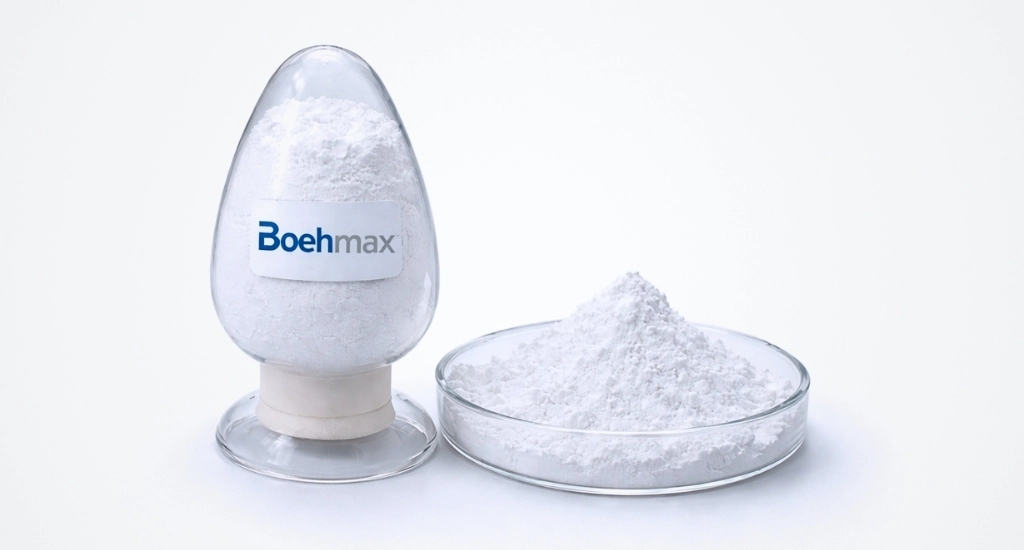
JYS-1027 is a high-purity nano-scale boehmite alumina powder designed as a functional alumina precursor and microstructure-control component. Its fine particle size, high specific surface area and good dispersibility support improved sintering behavior, densification, and mechanical performance in ceramic bodies and catalyst supports. Key parameters can be adjusted to suit different processes and formulation routes.
Recommended Applications
· Ceramic abrasives and tools (wear resistance and extended service life)
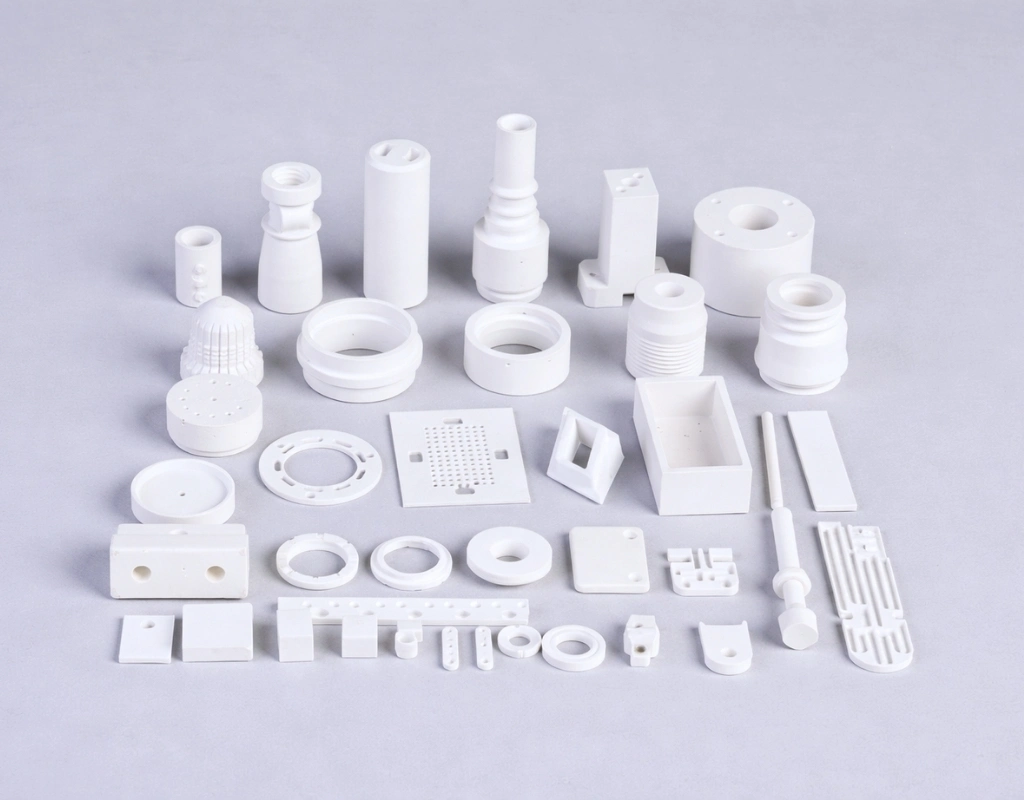
· Advanced structural ceramics and high-end components
· Automotive exhaust catalyst carriers / catalyst supports (carrier body densification and durability)
· Ceramic sintering toughening additive applications
Engineering Notes
· Dispersion quality is critical—stable dispersion improves densification uniformity and reduces defect risks.
· Optimize dosage together with particle packing strategy and sintering profile.
· Best results are achieved when the process is tuned for both energy efficiency and mechanical performance.
· Customization support available for key parameters to fit different ceramic/catalyst routes.
Recommended Use Range
• Typical addition level: 1–10% in ceramic formulations (system-dependent)
• Use modes: functional additive or alumina precursor depending on process route
• Optimization direction: tune dosage with particle packing design and sintering schedule
Typical Process Role
JYS-1027 is not a coating-grade material. It functions inside ceramic and catalyst formulations as a nano-scale alumina precursor / functional additive that promotes densification and microstructure refinement during forming and firing. This can support both improved mechanical performance and opportunities for more energy-efficient sintering in optimized systems.
Key Indicators
Application KPI | Technical Drivers |
Lower sintering temperature potential ( system - dependent ) | High reactivity from nano-scale + high specific surface area; improved sintering activity |
Higher overall strength / toughness | Microstructure refinement and improved bonding; toughening contribution |
Better densification | Enhanced packing and densification behavior during firing |
Longer service life / durability | Improved wear resistance and mechanical robustness in components |
Repeatable results | High purity with controlled impurities; stable dispersibility |
Key Technical Indicators (Customization Available)
Indicator | Typical Spec / Range |
Particle size (wet, nm, d50) | 30–50 |
Specific surface area (m²/g) | 170–350 |
Pore volume (cc/g) | 0.20–0.30 |
Pore diameter (nm) | 4.0–6.0 |
pH value | 3.5–7.5 |
Proof & Typical Results
Typical improvement directions
In ceramic and catalyst support systems, JYS-1027 is typically associated with improved densification and microstructure uniformity, enhanced overall strength/toughness and durability. In optimized formulations and firing schedules, it may also help enable lower-temperature sintering compared with conventional routes (system-dependent).
How customers validate
· Green strength and shaping stability
· Sintered density / shrinkage curve
· Mechanical tests (flexural strength, wear resistance, durability indicators)
· Microstructure evaluation (SEM/optical)
· For catalyst supports: surface area / pore structure consistency after calcination
Optimization notes
Functional performance depends on processing route. Best outcomes come from combining stable dispersion SOP, tuned particle packing, and sintering schedule optimization toward both mechanical targets and energy efficiency.
Need grade recommendations or technical support? Tell us your application, target substrate, and desired KPIs. We typically respond within 24 hours. |